
Grant Expedition
Grant Expedition offers what foreign tour operators don’t: insider knowledge. From as wildlife safaris, Mount Kilimanjaro treks, and Zanzibar beach trips, Grant Expedition’s packages offer it all, in addition to their “Plan Your Own Safari” package!
Role
Creative Team Lead
Researcher
Front-End Coder
Tools
Replit
Figma
Miro
Time Frame:
8 weeks
Team
Designers
Brad Weddington
Simon Stone
Devon Lee
Project Type
Website Redevelopment
Developers
Sadaf Saleh
Chandler Blunt
Casey Etzkorn
Davis Marden
Background
As part of our Capstone, we redeveloped the website of a Tanzanian Tour Company that was struggling to compete with foreign competitors. We paired up with Developers from the College of Business to rebuild their website from scratch.
Grant Expedition wanted a few key features:
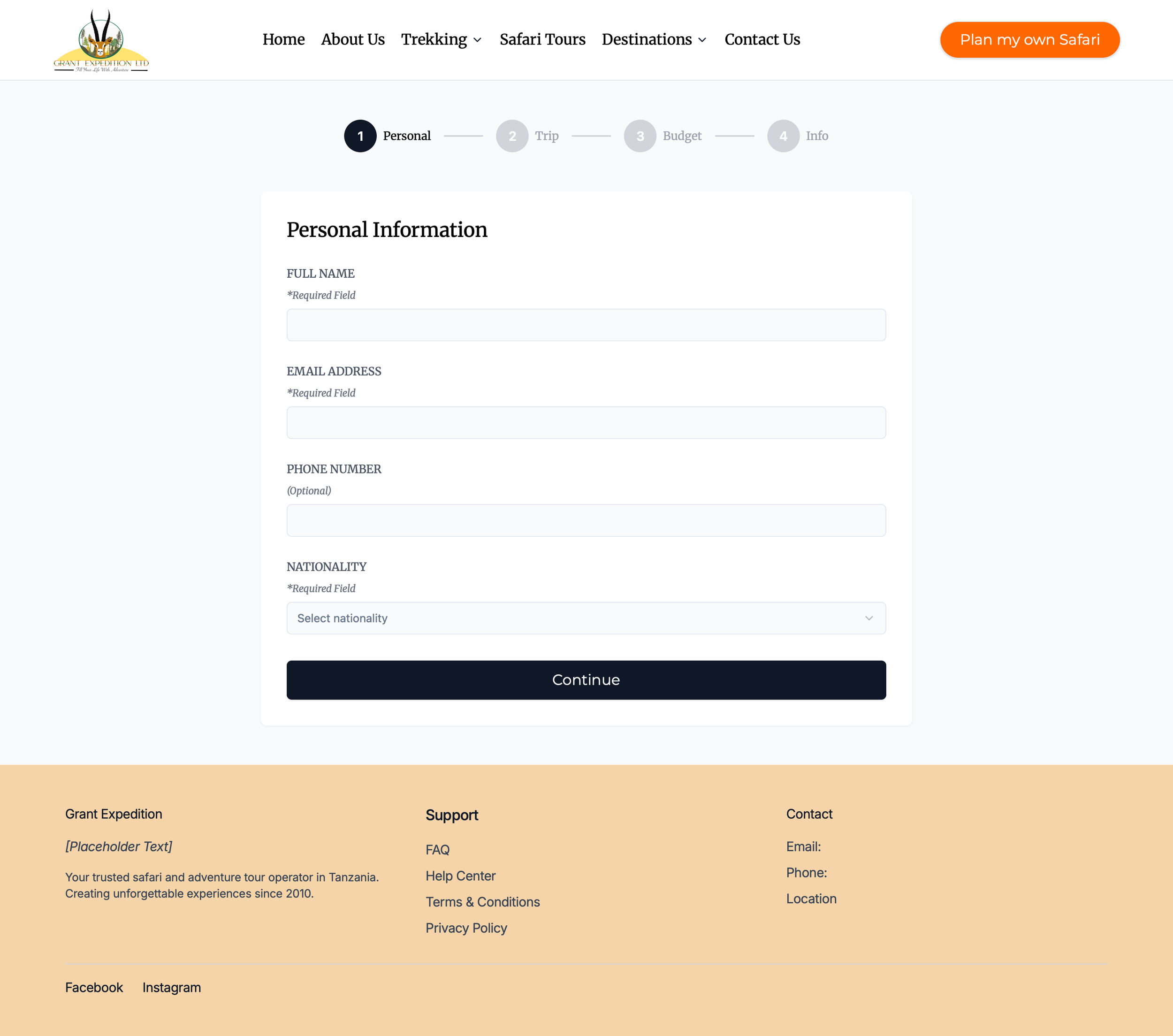
The ability to receive booking requests directly from the website
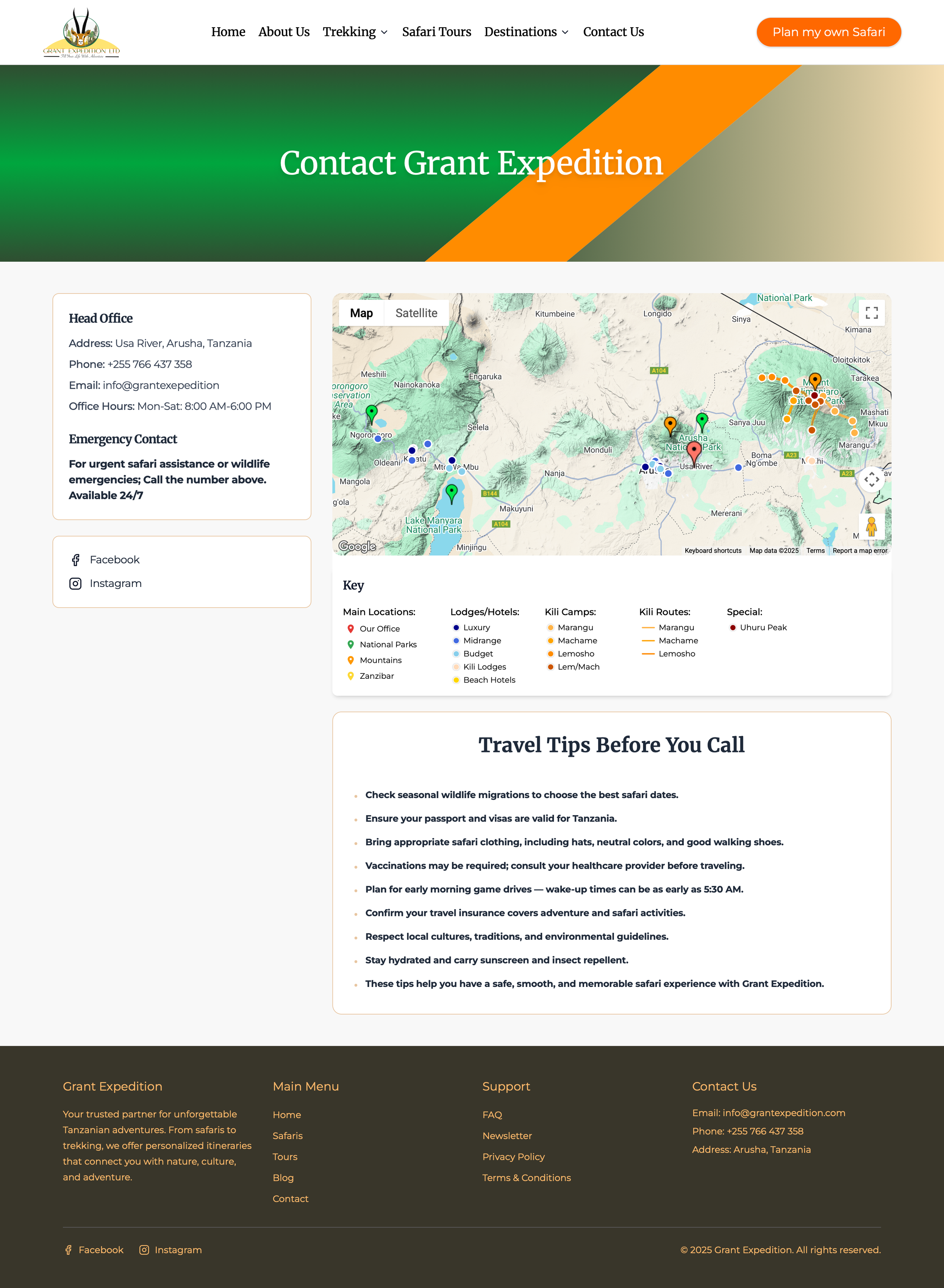
Google Map integration for their locations.
An aesthetically pleasing interface.
A working security system.
Context
This Capstone was a competition, with 7 joint-teams of UX Design and Computer Information Systems students.
It was highly experimental for us, as every group was instructed to use an AI vibe coding platform of our choosing. Only a few of us had rudimentary knowledge in AI prompting or coding, so we were going in blind.
We opted to use Figma Make for prototyping and Replit for coding, as I had prior knowledge on the program and could teach the other. This made us one of only two teams to not use Lovable as our vibe-coding program.
Design Questions
-What functions can we add to?
-How might we cater to the needs of those with inconsistent sleep patterns?
-What aesthetic changes might we make so that Grant Expedition can stand apart from the competition?
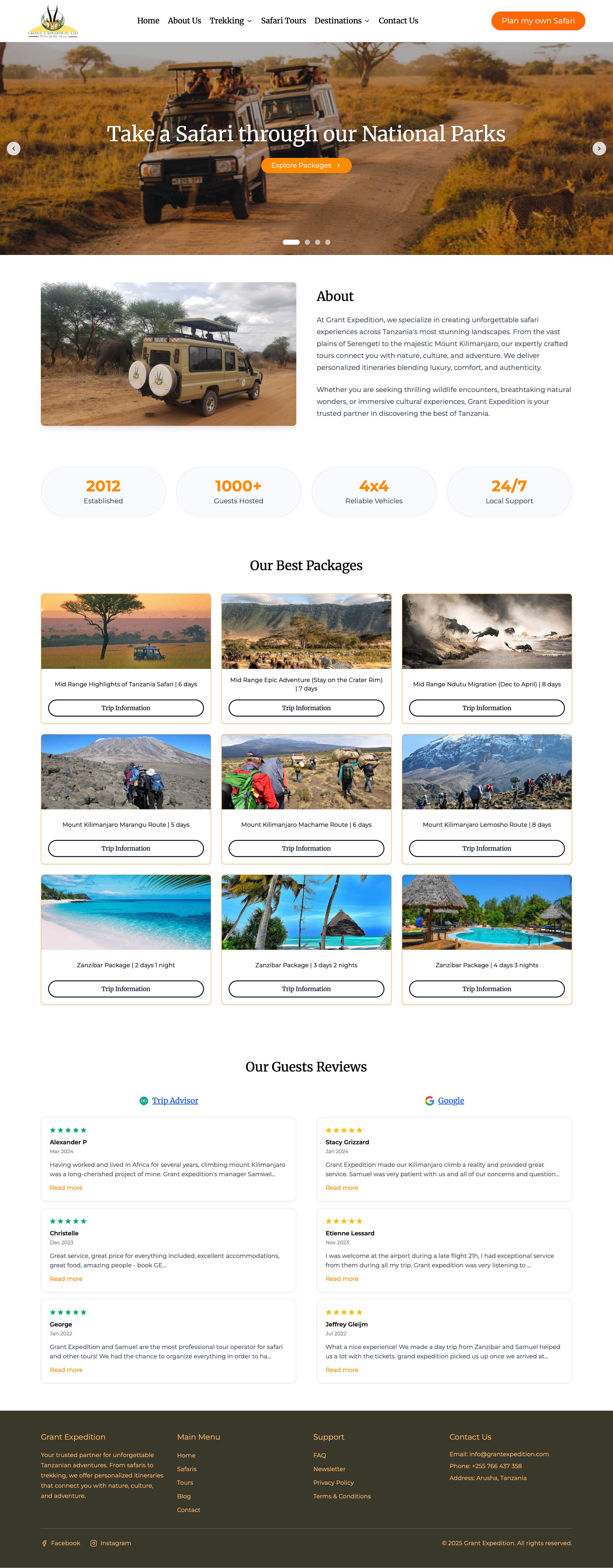
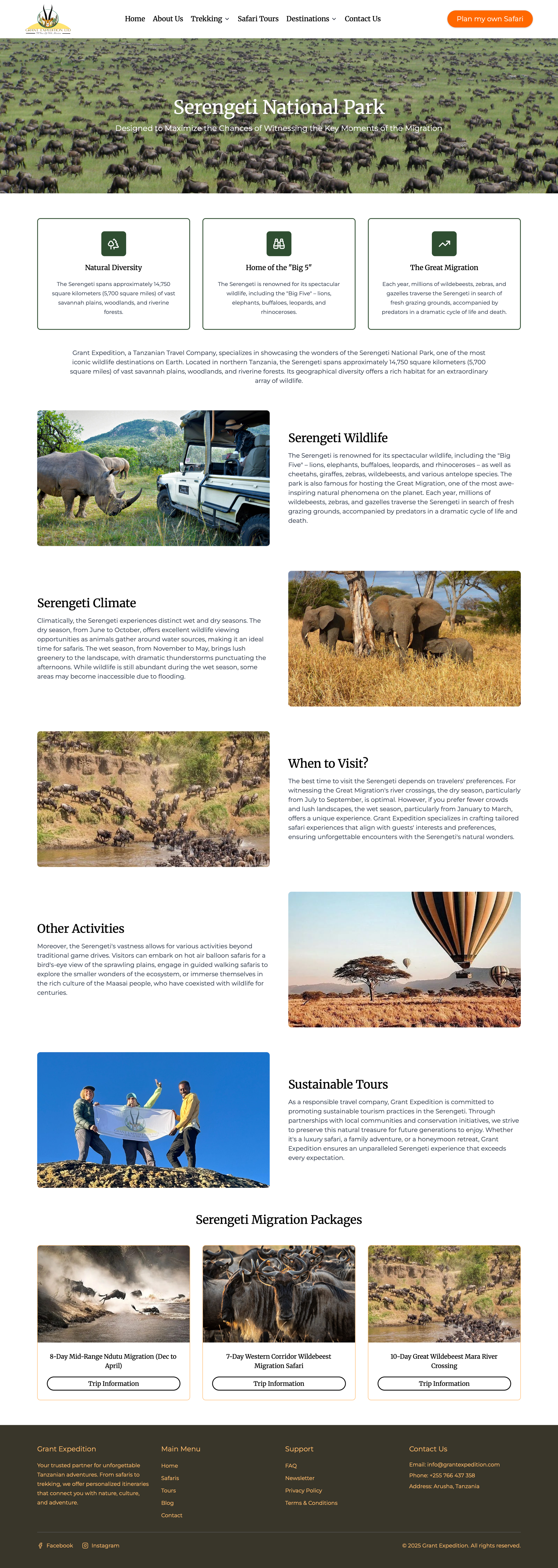
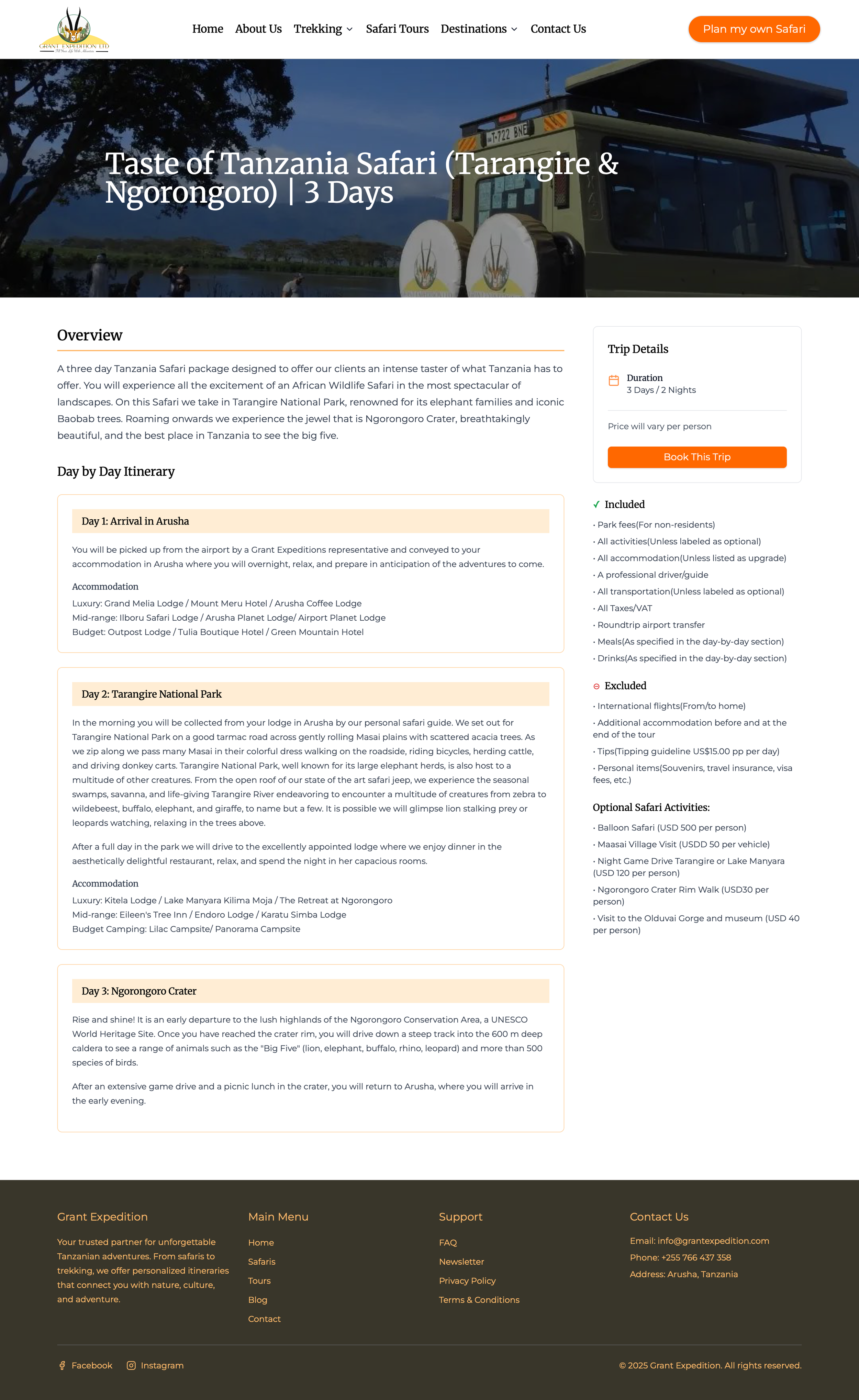
Before Redevelopment:
After Redevelopment:
Research
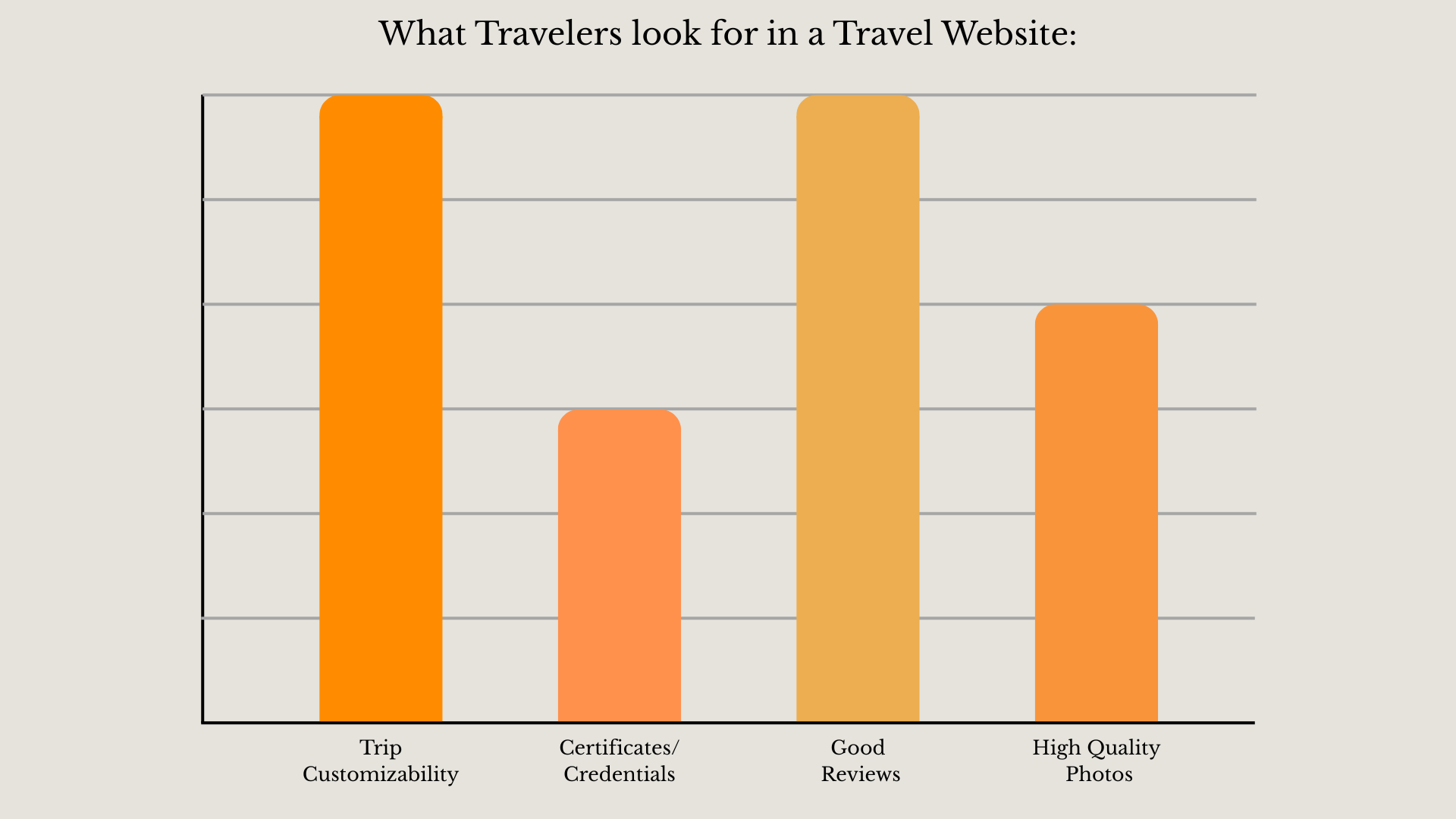
From conducting user interviews and usability tests with 6 adults between the ages of 25-55 who regularly traveled internationally. We found that when booking a vacation online, the average user is more likely to trust websites:
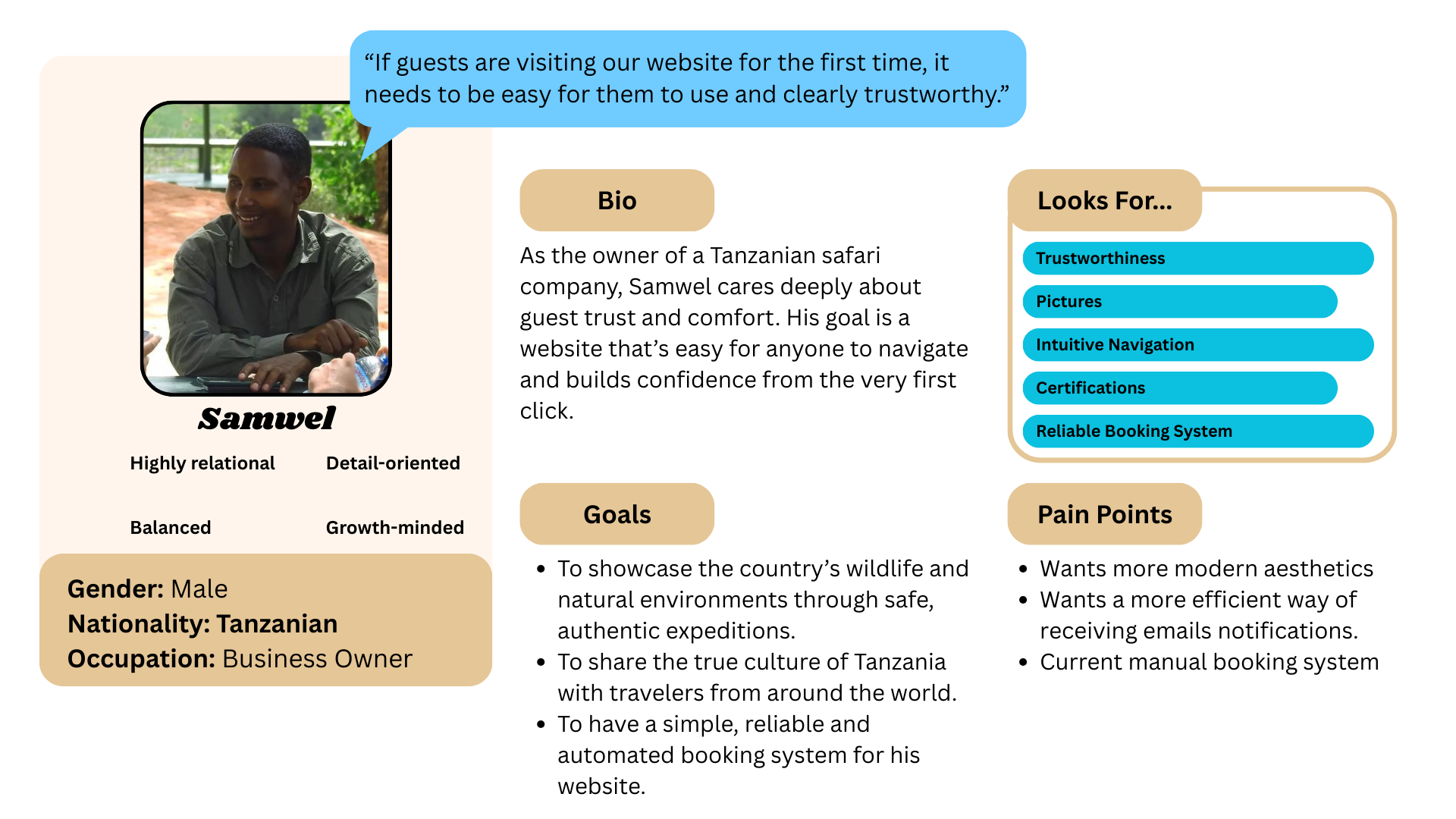
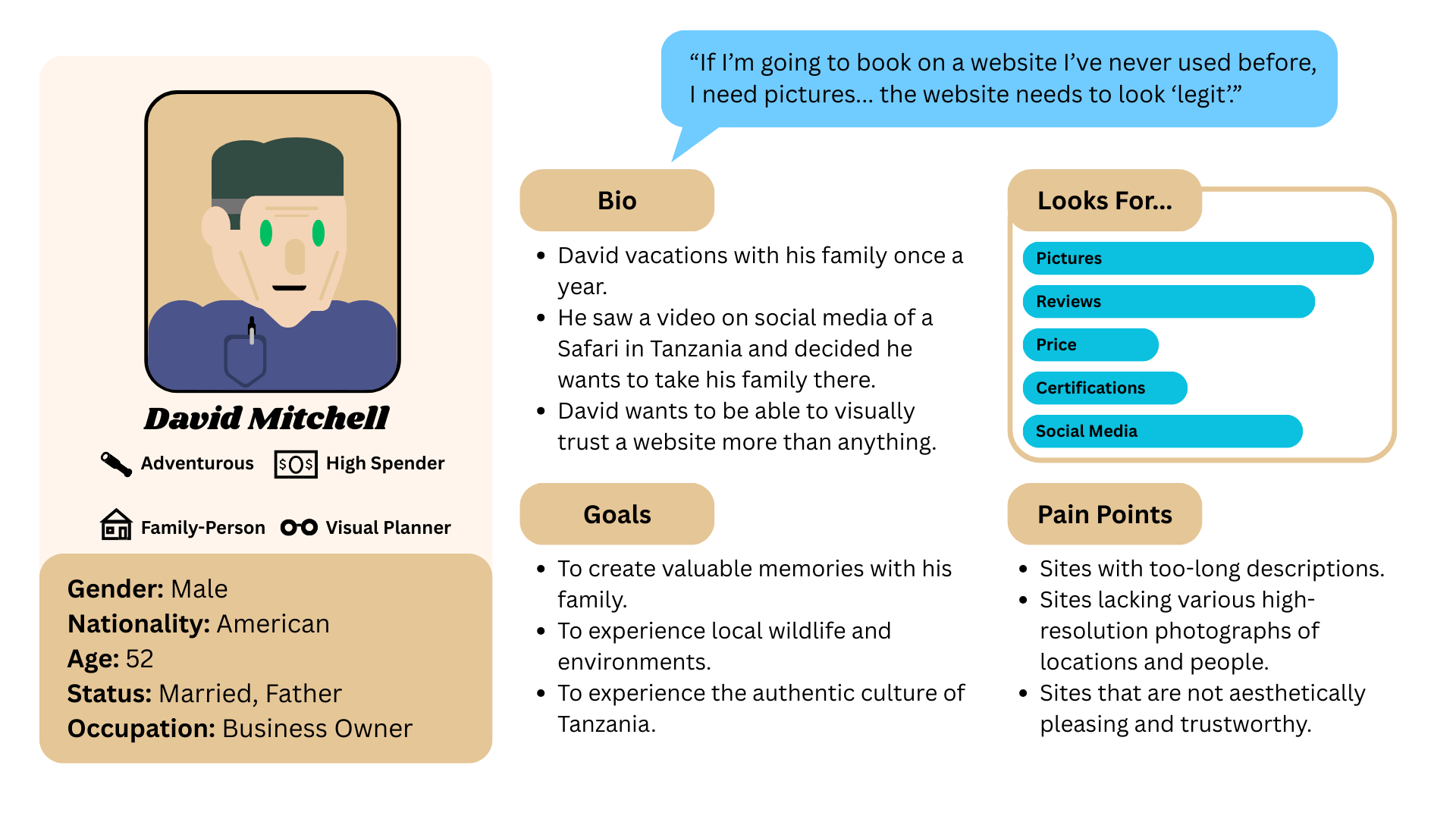
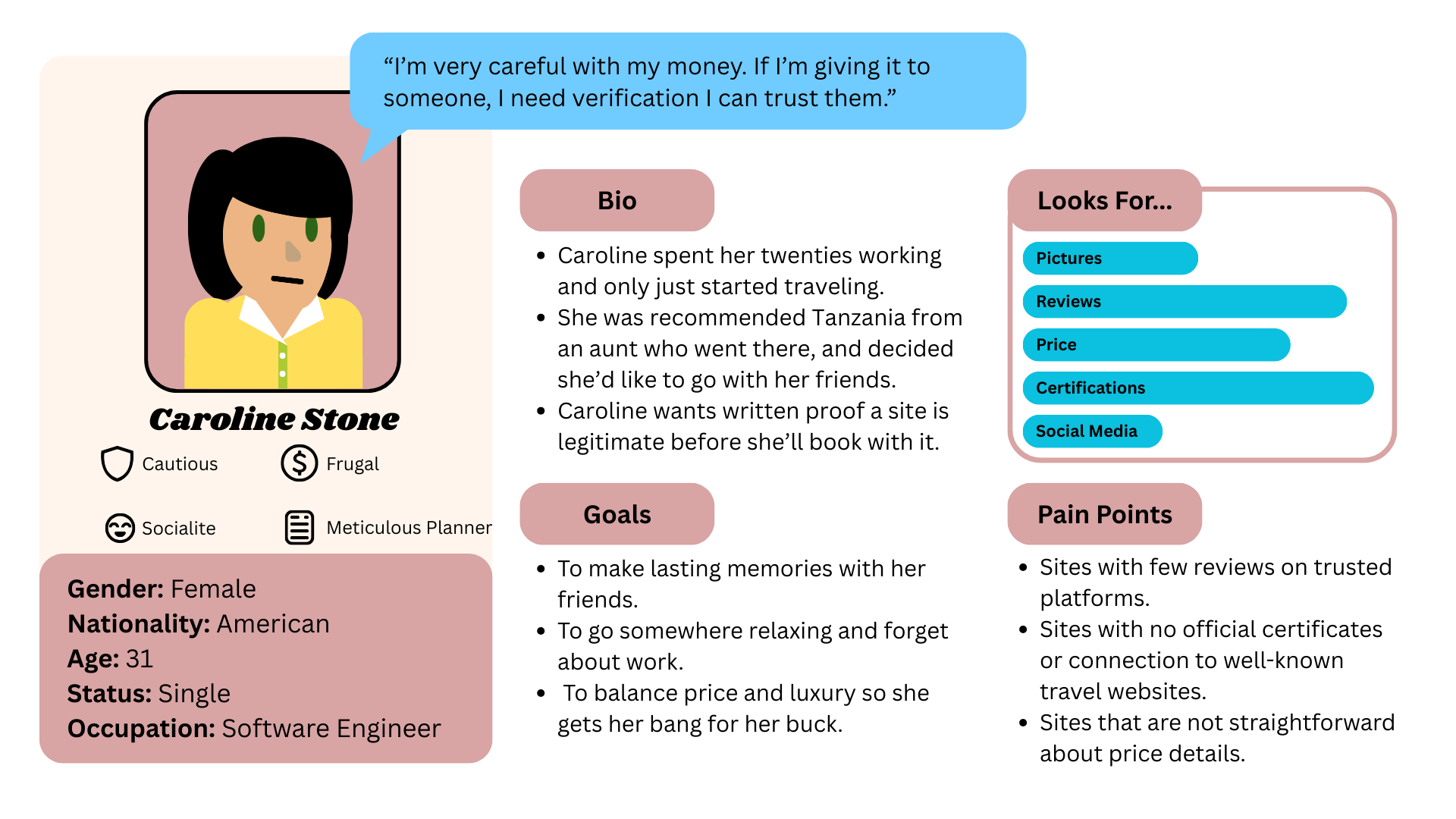
From there, we put together personas and storyboards to represent the potential customer.
We also requested more images to be used for the website, and researched each location offered by Grant Expedition.
Primary Persona ~
Samwel: Company Owner
Secondary Persona ~
David: The Adventurous Parent
Tertiary Persona ~
Caroline: The Amateur Traveler
The Design
Our client made it clear he wanted us to keep his original brand colors, orange and green.
We put together some rough wireframes and ran them through the Figma Make AI coder, looking to design a sleek, modern look. We then pasted those prototypes to Figma and manually edited them over the course of several group edit sessions held over zoom.
The Product
We attempted to run the Figma prototypes through Replit, but our Teams subscription ran into issues so we opted to use screenshots.
Replit was incredibly intuitive, and the process of fixing bugs and working with the Developers to add security and functionality to the site took less than two hours. The coding itself was finished in just under 20 hours.
Besides improved aesthetics, our websites key features included:
Separate booking forms for a user to both book a preset package or plan their own Safari. Forms were hooked up to a database
An interactive Google Map with a key, linked to every location associated with Grant Expedition.
A working security system.
Conclusion
Though we did not win the Capstone, our choice to experiment with Replit rather than Lovable gave us some key insights:
Replit is better at back-end than Lovable.
Replit was program capable of hosting the website on it’s own platform, with it’s own security systems and database and no need for integration of third-party back-end programs such as Supabase.
Replit is better at importing designs (built by us) and API Keys.
Where other groups’ Lovable sites were somewhat close to their Figma prototypes, ours were nearly identical to the screenshots we’d fed Replit.
Importing API Keys is simpler.
For Google Maps, we only had to copy-paste our Google API Key and the map worked. This contrasted with Lovable, which requires many extra steps to incorporate outside-party functions, such as maps.
Replit prompting is more expensive.
Replit uses a dollar balance rather than credit balance, meaning that each prompt costs a set amount of money depending on it’s complexity. So large commands can drain a budget fast.
Overall, we believe we made a strong product, but we could have added more functionality if we had used a cheaper program.